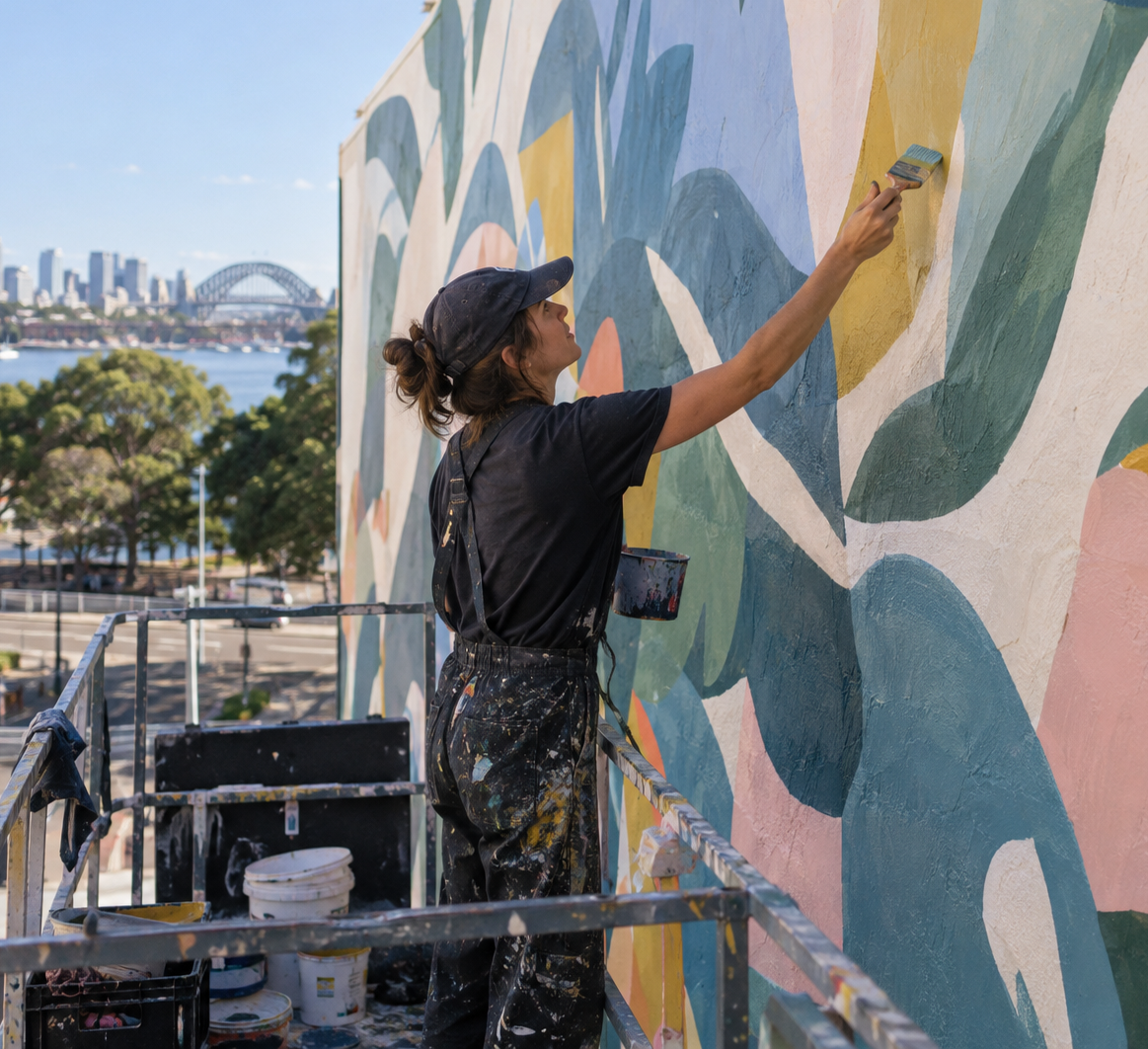
If you're partway through a development application in NSW and a council officer has just mentioned a "Public Art Plan," you're not alone in not knowing what that means. It's one of the most commonly misunderstood conditions in the DA process - and for small-to-midsize developers, it's often the first time they've encountered it at all.
Here's the plain-language version.
What is a public art plan?
A Public Art Plan is a document submitted to council - usually as part of, or shortly after, your development consent - that sets out how your project will incorporate public art. Depending on the council and the scale of your development, it might cover:
The type and location of artwork within the site
How the artwork relates to the site's context and community
A budget for commissioning
How the artist will be selected
It's not a nice-to-have. In many Greater Sydney LGAs, it's a condition of consent - meaning your project can't proceed to construction (or, in some cases, occupation) without it being approved.
Why developers get caught out
Public art conditions tend to surface late. They're often buried in a long list of consent conditions, phrased in planning language rather than plain English, and easy to miss if you don't have someone on your team who's dealt with one before. By the time it's flagged, timelines are already tight.
We see three patterns most often:
The condition is missed entirely until a certifier or council officer raises it well into construction planning.
The developer assumes "public art" means something decorative and optional, when in fact it's a compliance requirement with a defined approval pathway.
The plan is treated as a box-ticking exercise - a generic document produced quickly, without real thought given to the site or the artwork - which can lead to council pushback and delays.
What triggers a public art requirement in a DA
Public art conditions are typically triggered by development scale, location, or council-specific policy - not by project type alone. Councils across Greater Sydney and many NSW regional areas, including several inner and growth-corridor LGAs, have public art provisions built into their planning frameworks. If your project sits above a certain size or falls within a designated precinct, it's worth checking early - ideally at the DA lodgement stage, not after consent.
What "having a plan" actually solves
A well-prepared Public Art Plan does two things at once: it satisfies the council condition, and it sets your project up to commission artwork that's actually of a high quality - appropriate to the site, achievable within budget, and something you're not scrambling to sort out six weeks before completion.
If you're not sure whether this applies to you
The honest answer is: check your consent conditions, and check early. If a Public Art Plan is required and you don't yet have one, that's a conversation worth having before it becomes a construction-stage problem.
This is exactly the gap we built August Art Consulting to fill - clear, fixed-fee Public Art Plans for developers who've never had to commission one before, with no jargon and no surprises on price. If you want a straight answer on whether your project needs one, get in touch with us now for a free consultation.